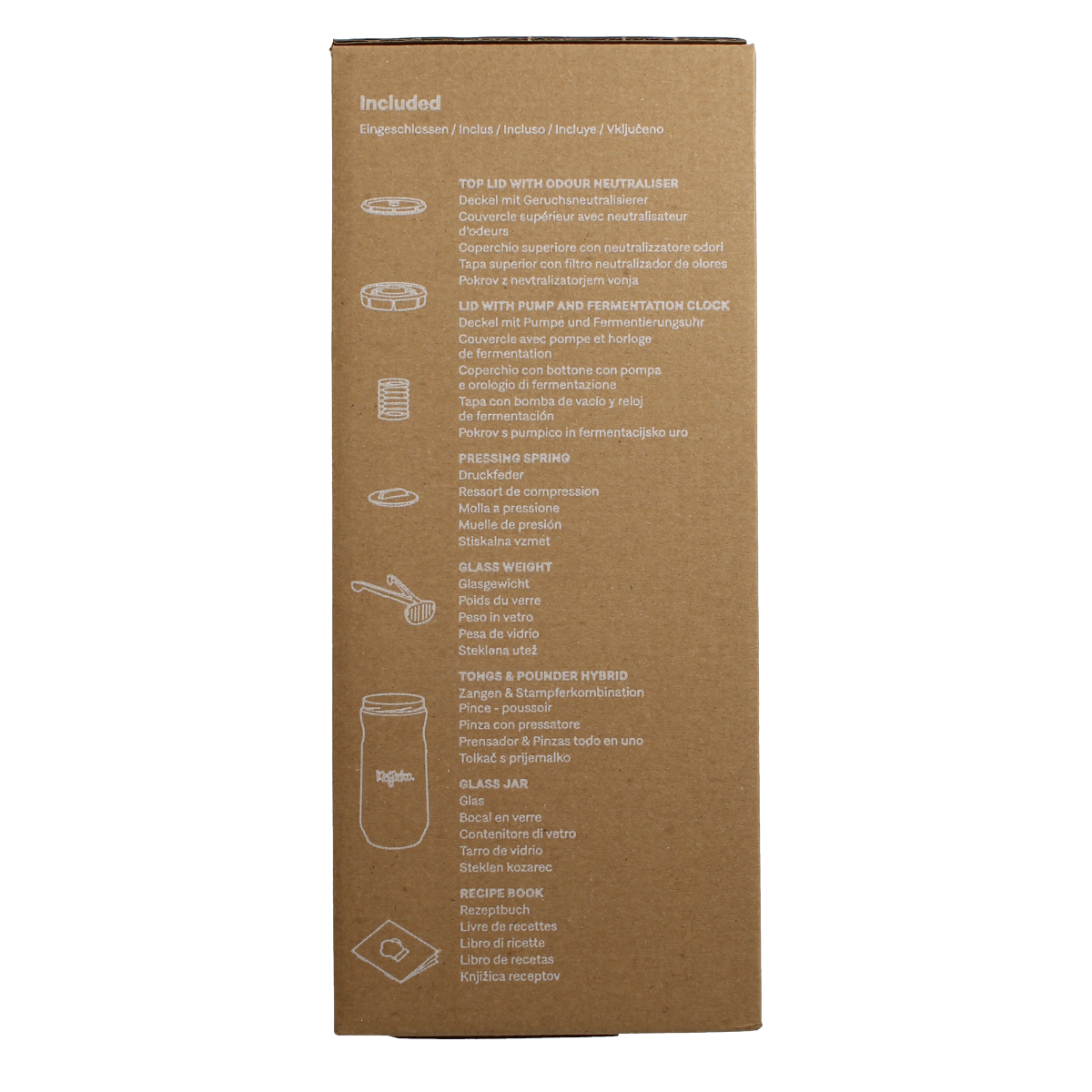
Kefirko Veggie Fermentation 1400ml 1.00 Piece
Kefirko Veggie Fermentation 1400ml 1.00 Piece
 In stock
 Free delivery on orders of €70 or more in NL & BE
 Order before 9.00 pm, delivered tomorrow


Couldn't load pickup availability
Returns
Returns
When you buy directly from us, we want you to be 100% satisfied with your shopping experience. We hope you love everything you receive from us, but if you’re not 100% satisfied, you can return or exchange any item within 30 days of your purchase. Please contact a member of our customer service team if your order isn’t to your liking or doesn’t meet your needs. We want to resolve this for you as quickly and easily as possible.
Step 1: Fill in the return details on the back of your order form. Can’t find your order form? Then download a copy of the returns form. Would you like to exchange the product for another one? Please let us know within 30 days of purchase.
Step 2: Return the order yourself via USPS, FedEx or another trackable delivery method. We recommend that you insure your parcel.
Please note that it may take up to 14 days for us to receive and process your return. The original postage and administration charges will not be refunded. We will credit or refund the cost of the returned items and any taxes charged, minus the original postage costs. Please contact customer services for further information about our returns policy. Any changes to your credit card statement should appear within two billing cycles.
Delivery
Delivery
Ordered before 9.00 pm? Your order will be delivered the next working day.
Free delivery on orders of €70 or more in the Netherlands. For orders outside the Netherlands, delivery charges will be shown at checkout.
Quality & safety
Quality & safety
Carefully selected products: We select our products with care and work with reliable brands and suppliers.
Quality is our top priority: All products are supplied in accordance with the applicable quality and safety standards.
Secure payment
Secure payment
Secure & reliable payment
Pay easily and securely using the available payment methods. Your payment details are processed securely and protected.
Available payment methods: iDEAL, Visa, Mastercard, American Express, Postepay
Kefirko Veggie Fermenter
Fermented vegetables are full of beneficial microorganisms and nutrients and are more easily absorbed than fresh ones. Regular consumption of fermented foods can have positive effects on gut health, cholesterol management, immune system strengthening, appetite regulation, weight loss, and much more.
Usage
HOW TO FERMENT VEGETABLES AND FRUIT? Fermenting vegetables is a traditional method of preserving fresh ingredients when they are available. All you need to do is use good quality non-metallic equipment and salt and/or brine. There are some basic principles to follow in this process: ensure no air ingress and maintain a high level of hygiene. There are many different recipes for fermenting vegetables. The Veggie Fermenter includes over 25 delicious recipes for beginners or experienced fermenters. WHICH VEGETABLES CAN BE FERMENTED? You can ferment almost all vegetables and even some fruits - apples, berries. Cabbage is one of the most popular vegetables to ferment, followed by radishes. You can ferment garlic, cucumbers, carrots, celery, green beans, and even herbs. There are some limitations with leafy green vegetables due to their distinct taste which becomes even stronger with fermentation. With a little experience, you can ferment almost anything. ARE VEGETABLES FERMENTED WHOLE OR IN PIECES? Depending on the recipe you are making. The purpose of chopping or grating vegetables is to allow them to release water and create enough brine to keep them submerged. But some vegetables you cannot grate and only chop into coarse pieces or leave whole. In that case, you can use a salty brine. WHY IS IT IMPORTANT TO ADD SALT AND HOW MUCH? Salt is important to create an environment where Lactobacillus bacteria thrive, while yeast and molds cannot form, thus protecting your ferment. The percentage of salt is calculated for the total weight of your ingredients and water. It is recommended to use about 2% brine. For 1 kg of ingredients, this means about 20 g of salt. Remember that fermentation proceeds faster at higher temperatures. So, in warmer seasons, you can add more salt to slow down fermentation. IS THE STRONG ODOR OF FERMENTATION NORMAL? Many bacteria and yeasts in your ferment are doing their job and producing gas. If this is new to you, it might come as a shock, but it does not mean that the fermentation has gone bad. The Veggie Fermenter has an active carbon filter that reduces the smell of gases from the jar. THERE IS MOLD ON MY FERMENT - NOW WHAT? Mold is the most common problem when fermenting vegetables. This usually happens because the ferment has come into contact with air. Some people only remove the layer with mold, but to be safe, it is best to discard the entire jar in this case. You can prevent mold growth by always keeping the ferment submerged. IS THE USE OF STARTER CULTURES NECESSARY? Vegetables and fruits contain all the necessary microorganisms for fermentation. If you are unsure or want it to proceed faster and more consistently, you can use some help in the form of starter cultures. This is usually a powdered culture that you mix into the brine. You can get help with whey, which is also full of microorganisms; some people like to use sauerkraut juice from the previous batch for new fermentation. Some even use extra kefir grains and add them to a mix. All these options are available, but do not be afraid of the wild fermentation that occurs naturally, with great ingredients and a little salt. HOW DO YOU KNOW IF YOUR FERMENT IS SAFE TO EAT? It is important to ensure that fermented food is safe to eat before consuming it. Here are some tips: Check for signs of spoilage: If you notice strange odors or tastes, mold, or signs of spoilage such as discoloration or sliminess, discard the ferment immediately. Look for bubbles: During fermentation, carbon dioxide is produced, creating bubbles in the ferment. If you do not see bubbles, it may indicate that the fermentation process did not occur or was incomplete. Check the pH: Fermented foods should have a pH of 4.6 or lower to prevent the growth of harmful bacteria. You can use a pH meter or pH test strips to check the acidity of your ferment. Taste a small amount: If you are unsure about the safety of your ferment, taste a small amount to see if it has a pleasant flavor. Use proper fermentation techniques: To ensure your ferment is safe to eat, follow proper fermentation techniques such as using clean equipment, using the correct amount of salt or starter culture, and fermenting at the correct temperature and time. WHY DO VEGETABLES CHANGE COLOR DURING FERMENTATION? Most vegetables change color slightly due to fermentation. The color usually fades. If they are very dark before fermenting, they can color the other vegetables in the jar. For example, beets or purple cabbage can color the entire jar pink. If you see a pink color, even if there are no vegetables of this color in the jar, that could be contamination, and you should discard the entire jar. Dark layers of vegetables in the jar usually mean that the vegetables were not covered with brine and came into contact with air.
Manufacturer / Distributor
Eco Groothandel